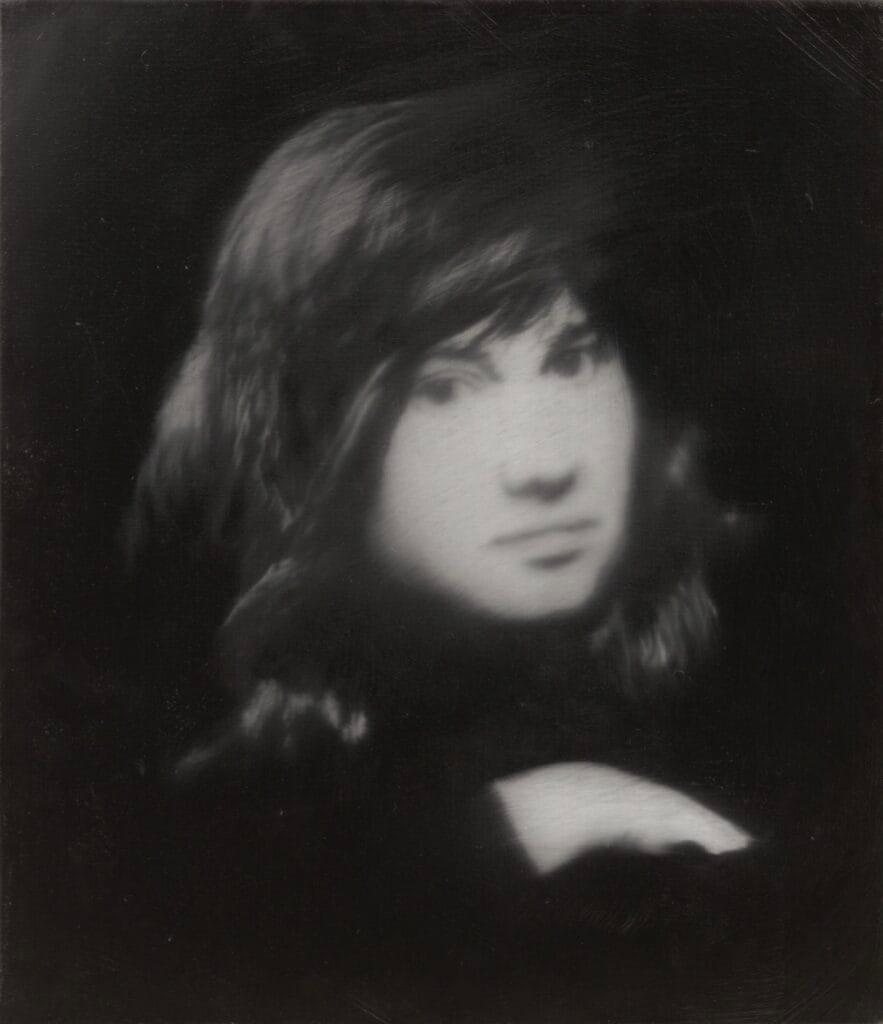
Gerhard Richter. October 18, 1977. 1988
Difficult images are a particular preoccupation of mine. Following Susan Sontag’s framework, I use “difficult” to mean images that are emotionally or morally demanding to look at — images that resist passive consumption and implicate the viewer, the maker, and the broader image-consuming society in their presence. There is, in other words, an imperative to looking.
These images circulate through late-stage capitalist societies with requisite special concern and care. Images of equivalent complexity can move through the gallery system as reproductions of news photographs, or arrive as fast-paced digital dispatches via official and social media channels. They resonate with striking degrees of variance across different audiences, different technologies of reproduction, and different physical locations.
Two sets of images have, for these reasons, stayed with me:
- Gerhard Richter’s October 18, 1977 cycle of paintings
- The death images withheld following the May 2, 2011 raid that killed Osama bin Laden
Both represent moments in which historically significant images are deliberately obscured, withheld from circulation, or rendered illegible. A paradox emerges: the less we are permitted to see an image — or the more it is blurred toward stylistic sublimation — the more urgently it seems to demand examination.
Richter’s paintings were made in 1988, nearly a decade after the deaths of RAF members Andreas Baader, Gudrun Ensslin, Jan-Carl Raspe, and Ulrike Meinhof in Stammheim Prison. Richter employs deliberate blurring of his photographic source material, rendering faces and scenes of public grieving nearly illegible. This technique — intentional and pointed — mirrors the ways in which history becomes distorted over time, and images grow diffuse through mass circulation. There is a particular honesty in refusing clarity: it acknowledges that history is always, to some degree, contested ground.
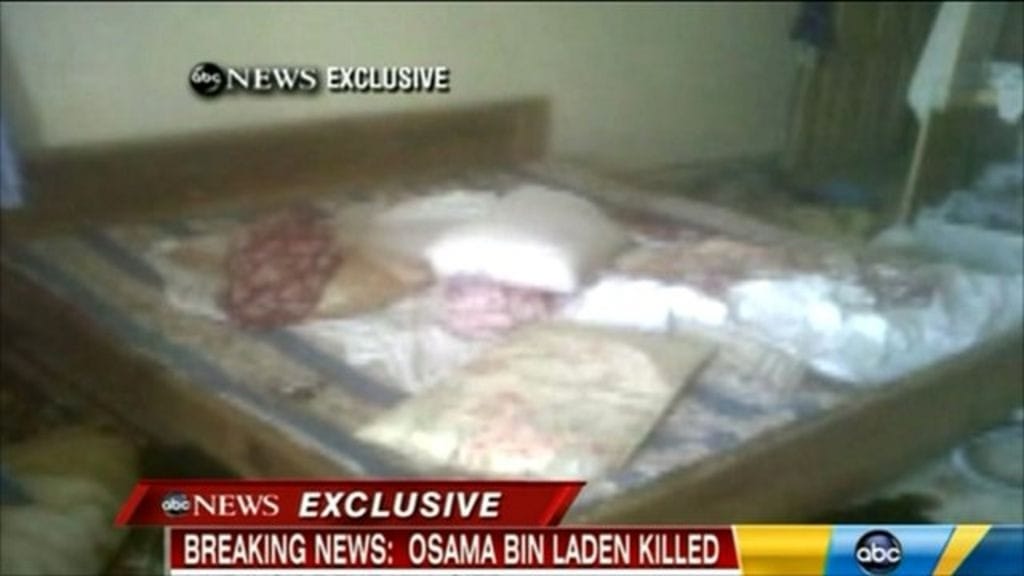
The bin Laden raid photographs operate differently, representing state power through suppression rather than artistic reckoning. Fifty-two images from the 2011 raid remain classified and withheld from public view. These images persist in the bureaucratic black boxes of the CIA despite multiple FOIA requests and legal challenges — including Judicial Watch v. CIA (2013), in which federal courts upheld the government’s argument that releasing the photographs could incite violence. The images exist, officially, but for all practical purposes they do not.
What is striking is that the few photographs that have entered public circulation share an aesthetic with Richter’s paintings: the same dreamily eerie softness, the same sense of something just beyond legibility.
This is one of the central paradoxes animating this comparison. The images of bin Laden’s death and of the compound in Abbottabad are more thoroughly hidden than Richter’s deliberately obscured paintings — and yet the two sets of images share a remarkable structural logic: both involve death at the hands of state power (RAF imprisonment versus a Navy SEAL raid); both remain historically contested (suicide versus murder, justified killing versus extrajudicial execution); and both deploy visual suppression to manage meaning rather than clarify it.
But the nature of that suppression differs fundamentally, and the distinction matters. Richter chose obfuscation as an artistic device; the bin Laden images are obscured as a function of government policy. Richter has said that he was trying to paint the impossibility of depicting these events — that the blur was not about concealment but about the genuine impossibility of clarity. His paintings are, in this sense, invitations: they open interpretation rather than close it, and they admit their own limitations as representations of history. The classified bin Laden photographs do the opposite. State secrecy forecloses interpretation entirely, denying not just access to the image but the very premise that representation poses a problem worth acknowledging.
This raises questions that are difficult to fully resolve. What does it mean to be asked to trust historical narratives about world-historical events when we cannot visually verify them? Do Richter’s paintings feel more honest precisely because they advertise their own constructed nature? And how should we understand the official posture surrounding the bin Laden photographs — a claim to transparency sustained by practiced opacity?
Both sets of images seem to suggest that in moments of acute ideological crisis and state violence, the image itself becomes too dangerous to be seen clearly. Richter arrived at an aesthetic answer to this problem. The bin Laden photographs received a bureaucratic one. The difference between those two responses — one an admission, the other a refusal — is, in many ways, what this post is about.
What both collections ultimately share is the recognition of a deeper truth: that the photograph which matters most is the one we cannot fully see.